

The Lablab Laboratory
A case study in starting a new crop breeding project

It’s easy to find beginners spinning about grand plans, and also possible to find experts who mastered a skill for so long they struggle to explain how it works. Neither of those perspectives are especially useful for someone in between who is first putting their own plans into action. For those of you considering picking up your own crop breeding project, this article (and follow ups) is a case study in how to strategize and trouble shoot as you go.
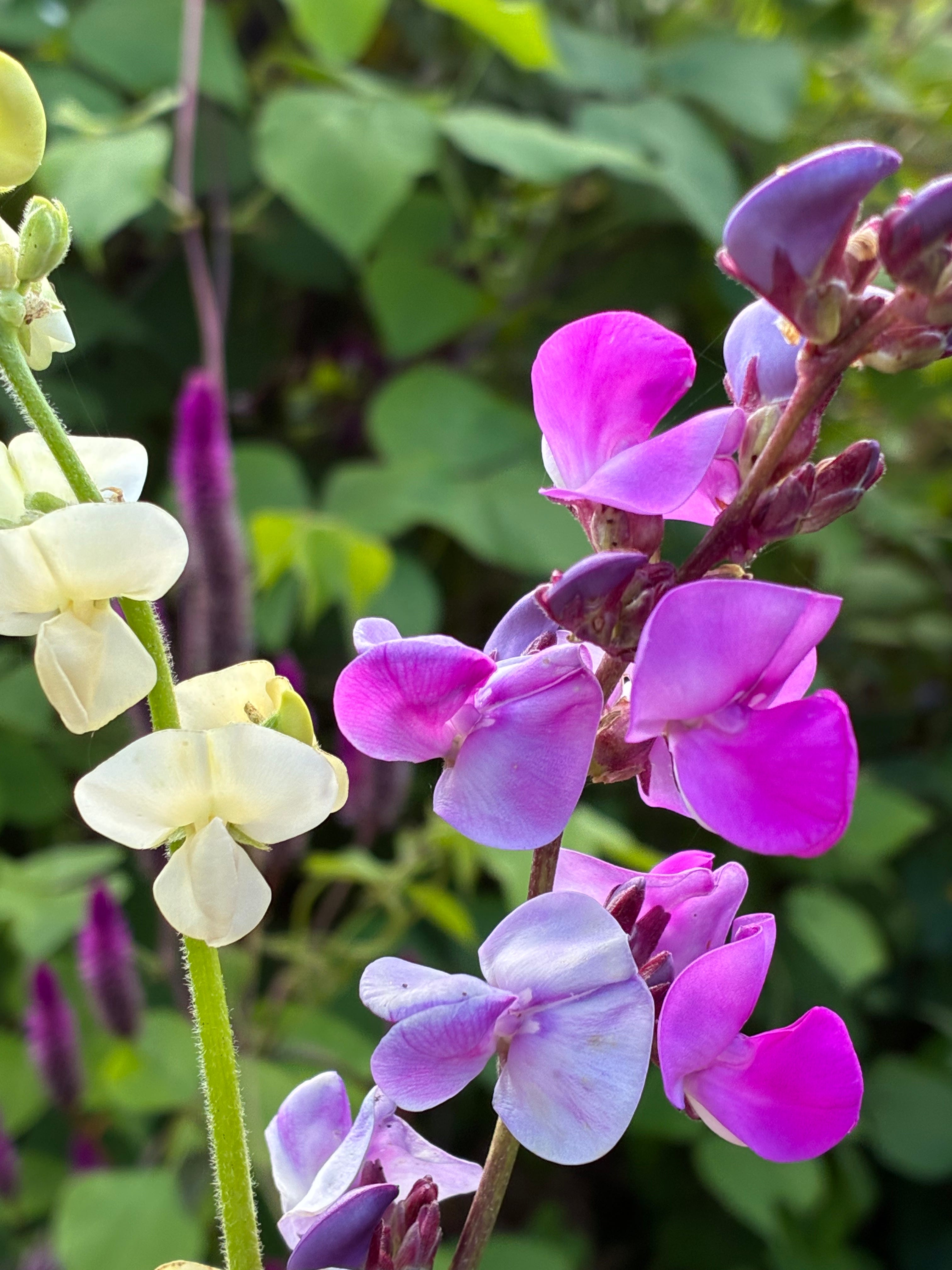
The test subject in question- the magnificent lablab bean. First the background. This legume is commonly eaten in south east Asia as tender pods or immature beans, and in India as a dry staple legume. I first encountered it as a variety named Rongai which was bred by local beef producers as a pasture legume. This strain is very hardy and improves soil but not especially good for human consumption. It does at least have pods held high above the plant when grown without a trellis, which dry readily through our mild winters. More recently I bought several varieties of the vegetable kind, and mixed them all together into a blend since they weren’t distinct enough to warrant separate seed saving. This variety has become my primary cool season fresh legume. On a whim, I tried processing some of its dried seeds as a staple legume and was pleasantly surprised. Their relatively simple preparation is a nice contrast to the more toxic jackbeans (just a little cyanide to boil off), though the flipside is the dried seed are much more prone to weevil infestation in storage.
The main problem with the vegetable strain for staple use is their fat juicy pods which reabsorb moisture as they mature (leading to rot), and which are fiddly to open when dry (unlike the hard podded Rongai strain). The genetic diversity of this species in Australia is otherwise nil- none are held in the grain gene bank. But the two strains I have are different enough to give me hope of breeding a sprawling staple crop variety which can fill up empty spaces over winter and produce a useful yield.
I have grown the two strains together for a few seasons with no signs of spontaneous hybrids. This is common with legumes since each species has specialised pollinators in the wild, and many have lost their capacity for outcrossing. That means I have to invest some time making the initial cross by hand. How do you figure out how to do this? With a little research and a lot of trial and error.
The first thing I did was plant plenty of both varieties in a location that was easy to access. They started flowering together a week ago, so that gave me the material to begin. A quick google image search for lablab/dolichos flower dissections turned up a couple of low-quality line drawings from scientific papers- not that informative, but worth checking. I needed to get my hands dirty.
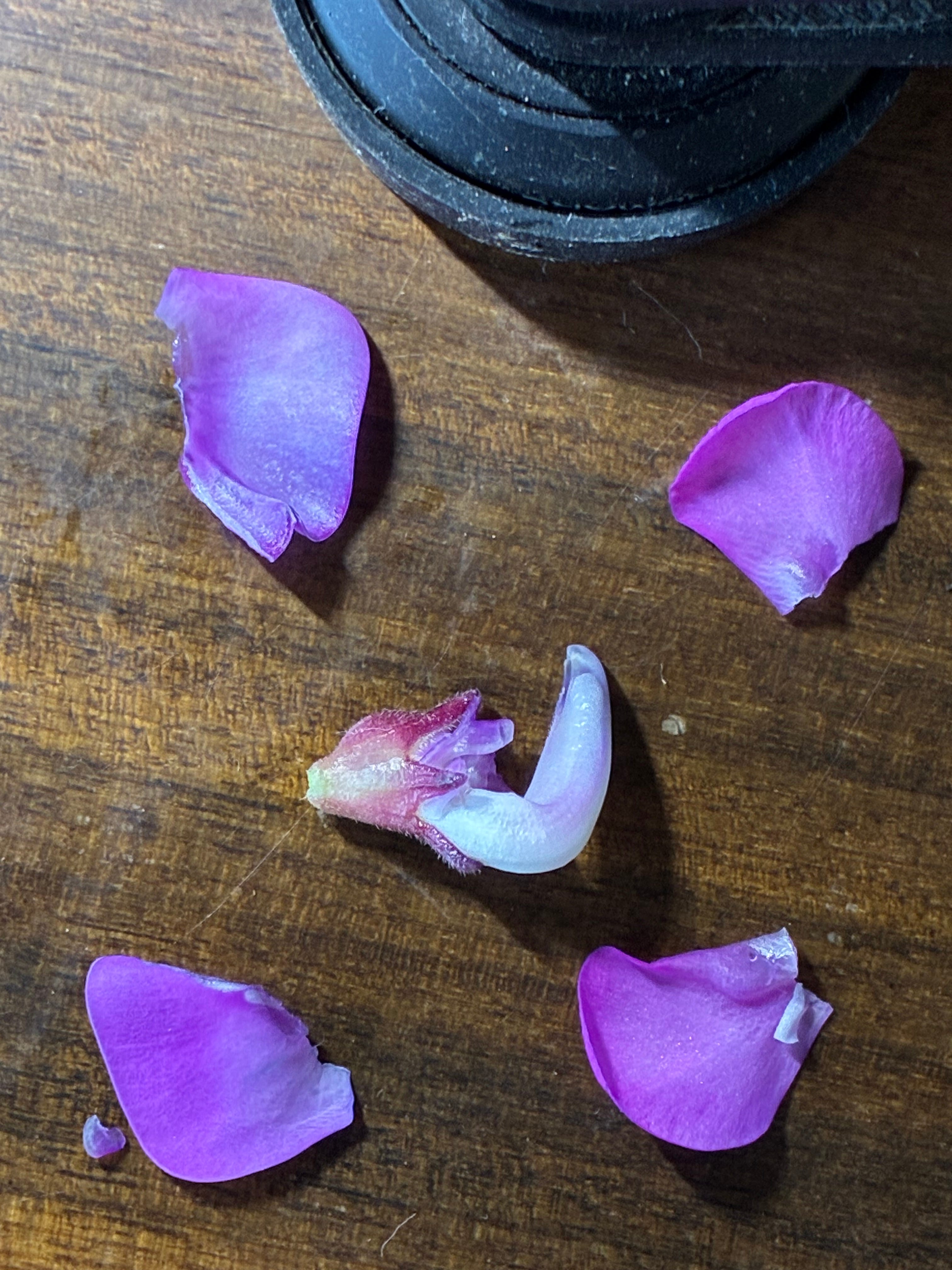
When mastering hand pollination each species has its own particular quirks. Apart from understanding the anatomy and timing, the biggest hurdle is developing the touch to manipulate the flowers without damaging the critical parts. The only way to do this is to destroy a lot of flowers while you figure out their limits. I found my trusty pair of watch makers forceps, gathered some flowers of each type, and sat down at my desk with the assistance of a powerful LED torch.
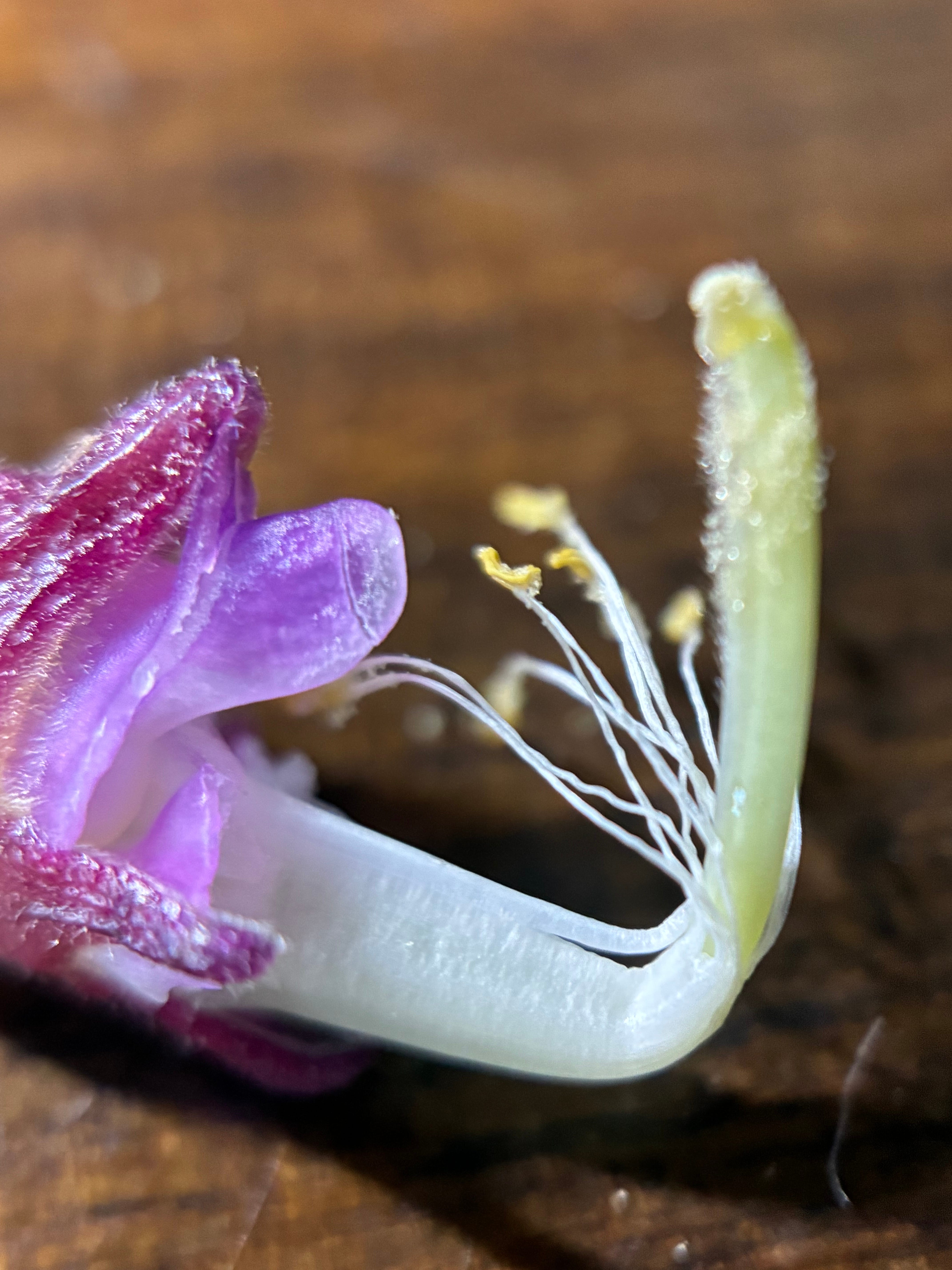
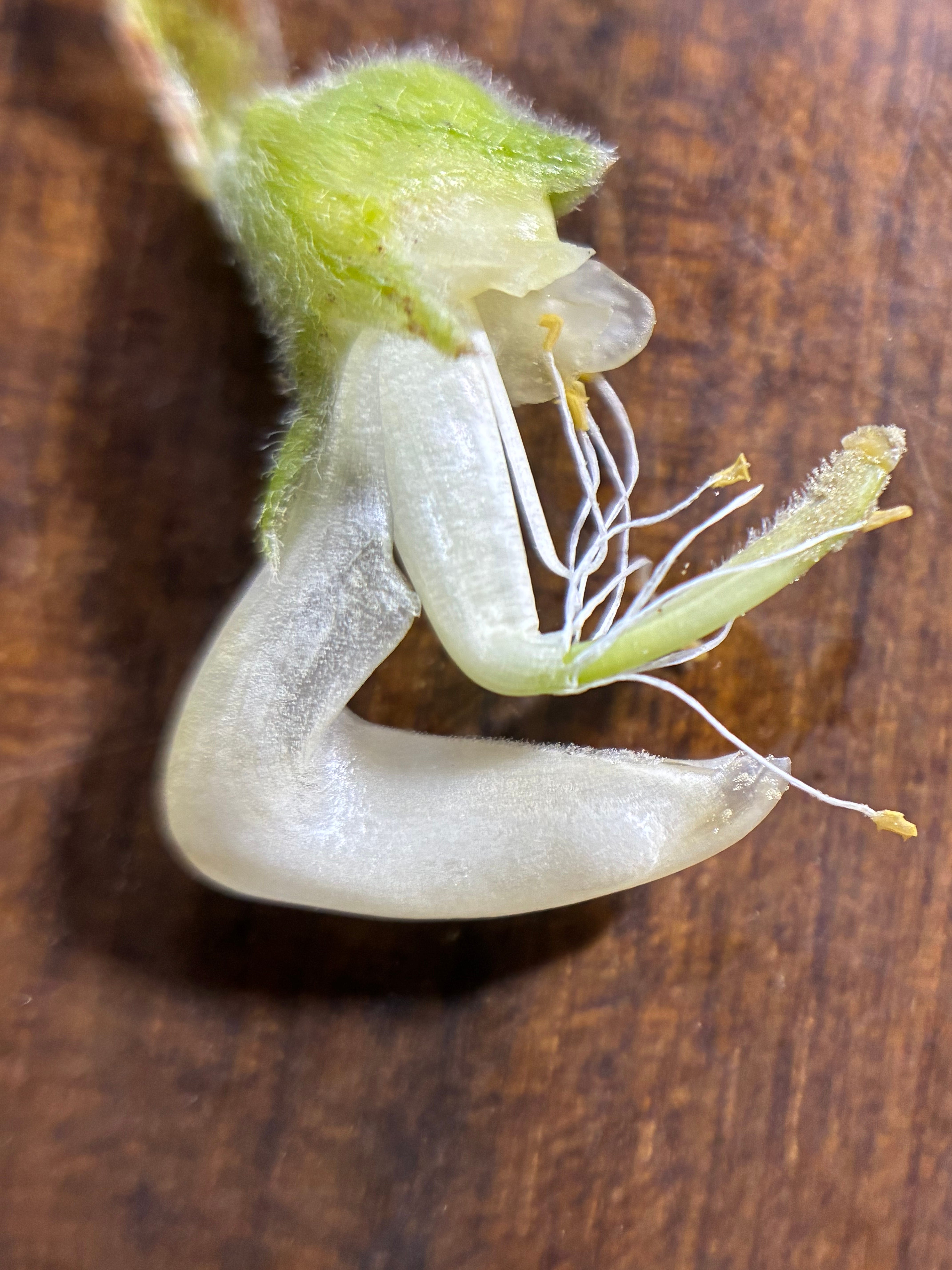
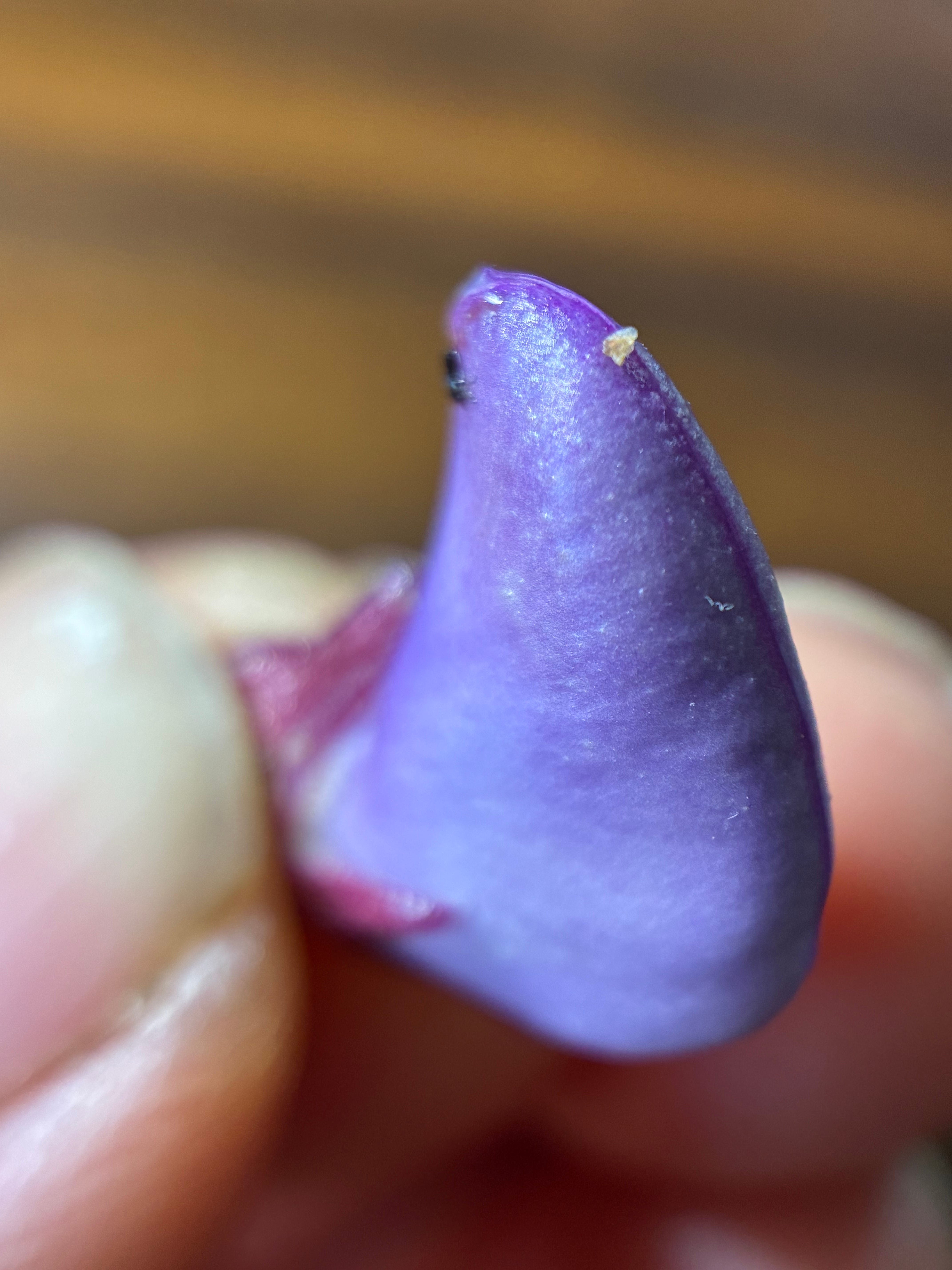
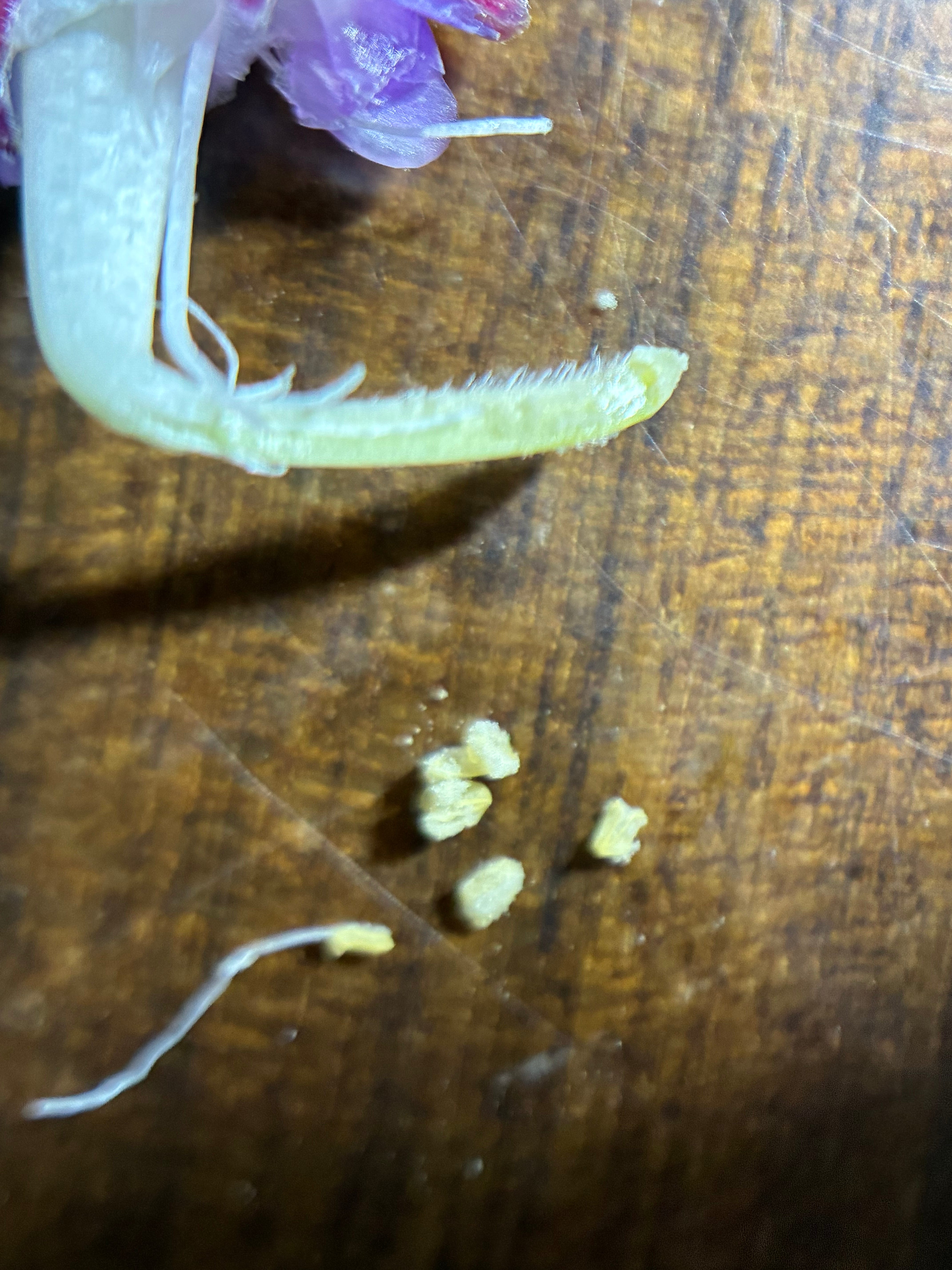
The first step is to just play with the material under the best possible conditions. I took my time removing petals which usually get in the way. With legumes you also have to open the keel which protects the stigma and stamens, and each species has its own mechanism suited to its intended pollinator. With lablab beans the keel has a weird right angle in it. I tried multiple angles of attack. You can use the tip of the forceps to split the underside of the keel and lever it open with a slight risk of damaging the stigma. You can also push it down, but I haven’t quite figured out the touch needed to do this reliably. I used a clip-on magnifying lens on my mobile phone camera to take a closer look. Some people use head mounted magnification. Even though my vision is starting to decline (I should get reading glasses but keep putting it off) with pollinating I find you can rely on feel and approximate location for manipulation with even the tiniest flowers. This makes the critical next step of working in the field more convenient.
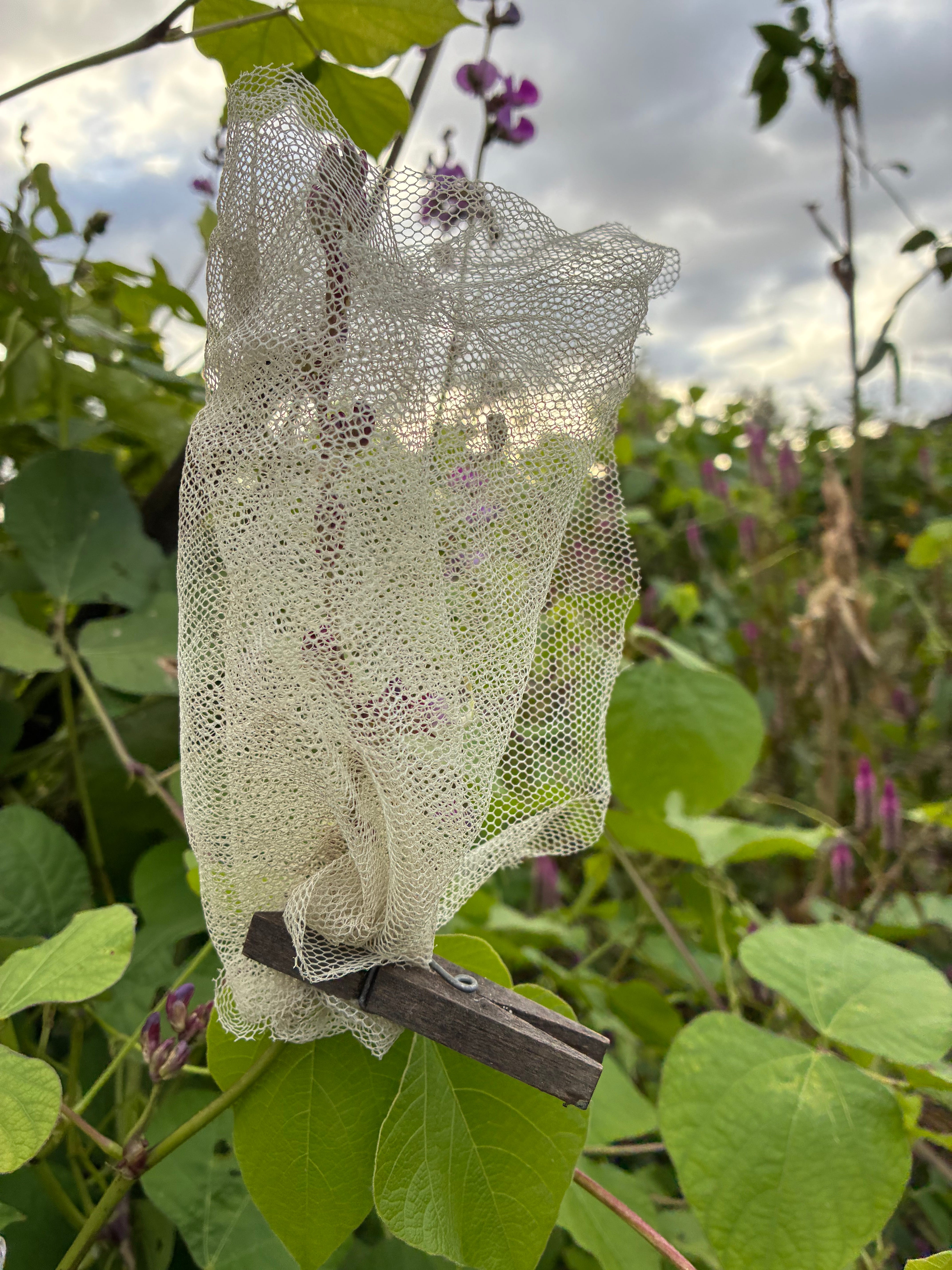
The next step was finding my strips of gauze, essential for wrapping manipulated flowers to prevent damage and uncontrolled insect pollination. The biggest investment is growing out the hybrid seed, so it pays to be confident the cross actually happened. I hold these in place with clothes pegs. It takes a bit of practice to wrap each species without damaging it. Expect some more damage while you figure it out, and better to be a bit rough and lazy to begin- you can always concentrate harder for the next flower if you make mistakes. You will be manipulating a lot of flowers, so it is worth figuring out how to do it efficiently.
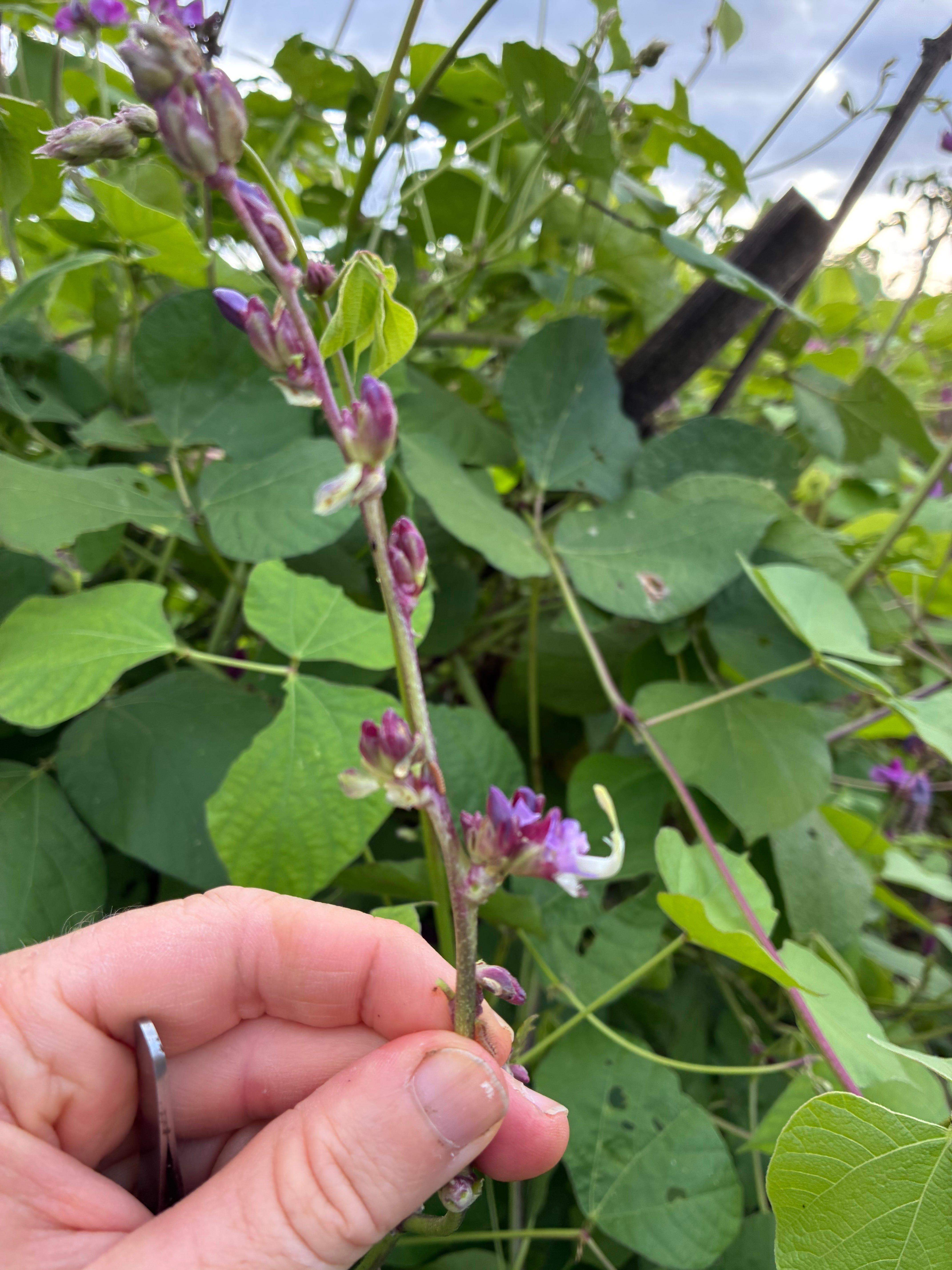
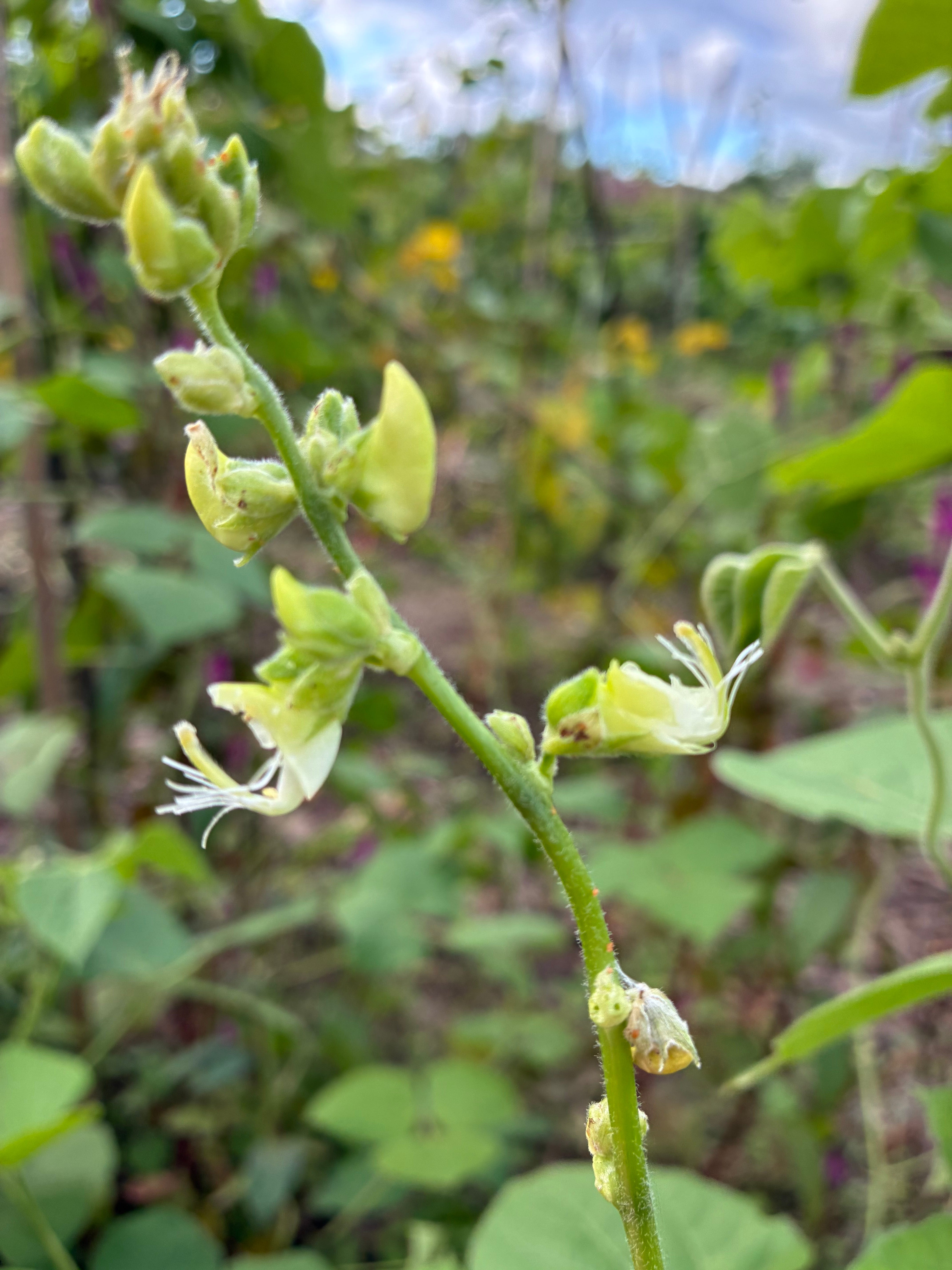
Late in the afternoon I headed out into the lablab lab and tested my skills. Legume buds begin swelling the evening before and this is usually the best time to emasculate (remove the stamens) so you can do a controlled pollination the next morning when the stigma becomes receptive. I found the process a little challenging- removing the petals was easy, but the keel was strong enough that I broke the flowers from the stalk several times. Shifting my grip a little further from the stem helped, but I need to work on this feeling. Another small mistake- I misidentified some buds as being ready for emasculation when they were still another day away. These were smaller and much more delicate, and I detached every single one from the stalk in my attempts. I also removed all the older flowers from the stalks since I don’t want any selfed seed in the mix. I emasculated one pink flowered vegetable strain stem, and one white flowered Rongai stem, then bagged another bunch of each with whole flowers as a pollen source. This is worth doing as the bees often strip flowers of pollen before you are out of bed.
The next morning, a small disaster. It began raining non-stop. This makes manipulating powdery pollen almost impossible. The weather is likely to clear by the end of the week. Rather than struggling against nature, I just remembered the lablabs will keep flowering for at least another month. I will try again when the sun is shining. With hand pollination sometimes you need to wait years for the right conditions to line up.
Hand pollination is a peculiar task. It doesn’t take much time in the day (at least once you have mastered the touch of the species in question) but it is very demanding when it comes to timing. The window for stigma and pollen ripeness is usually an hour or two in the morning, and for flowers being mature enough for emasculation another hour or two in the late afternoon. And you need to keep up the cycle every day until you run out of flowers, or have enough pods set to grow out. Skipping days means that emasculated flowers go to waste and self-pollinated pods end up in the mix, which might waste energy in the hybrid grow out process. Luckily the two parent strains couldn’t be more distinct, so I should have no problem identifying the successful crosses before they flower. I probably only need about 10-20 hybrid seeds to open the door to selecting the staple crop variety I am dreaming of. Perhaps one or two more rounds of hand back crossing will be necessary in a few years.
All going well in 2026 I should have a hardy, productive, easy to process and delicious staple legume to complement my jackbeans added to my garden sometime in the next 5-10 years.
Hopefully this window into a breeding project at its delicate inception will inspire you to do the same with a crop that you will one day fall in love with.
By way of coincidence someone just gave me a couple of hundred seeds. I love hyacinth beans as an ornamental, but I’ve never eaten them for some reason. I hear they are potent nitrogen fixers as well.
I wonder if emasculation by boiling water or something similar would spare the female parts or not